
How to Be the Architect of Your Time
When you stand in front of extraordinary architecture, there’s often a moment of awe and disbelief.
How did humans even imagine this—let alone build it?
Since returning from a month-long holiday in France, that feeling has stayed with me. One place in particular, Rocamadour, is a town that appears to be built directly out of the rock face. Every curve, every wall, every pathway seems to be shaped by both possibility and constraint. Wandering around these structures, you sense the craftsmanship and patience it must have taken to make something so intentional and enduring.
As I’ve been noodling over the topic for this month’s blog, it struck me that many leaders experience the opposite sensations when it comes to their time.
Their schedules often feel as though they were constructed by someone else—by the demands of others, by urgency, or by expectations. Days stack up meeting after meeting and fire after fire, leaving little room to think, decide, plan, or even breathe.
But time, like architecture, is shaped. And we have more power and ingenuity over it than we think.
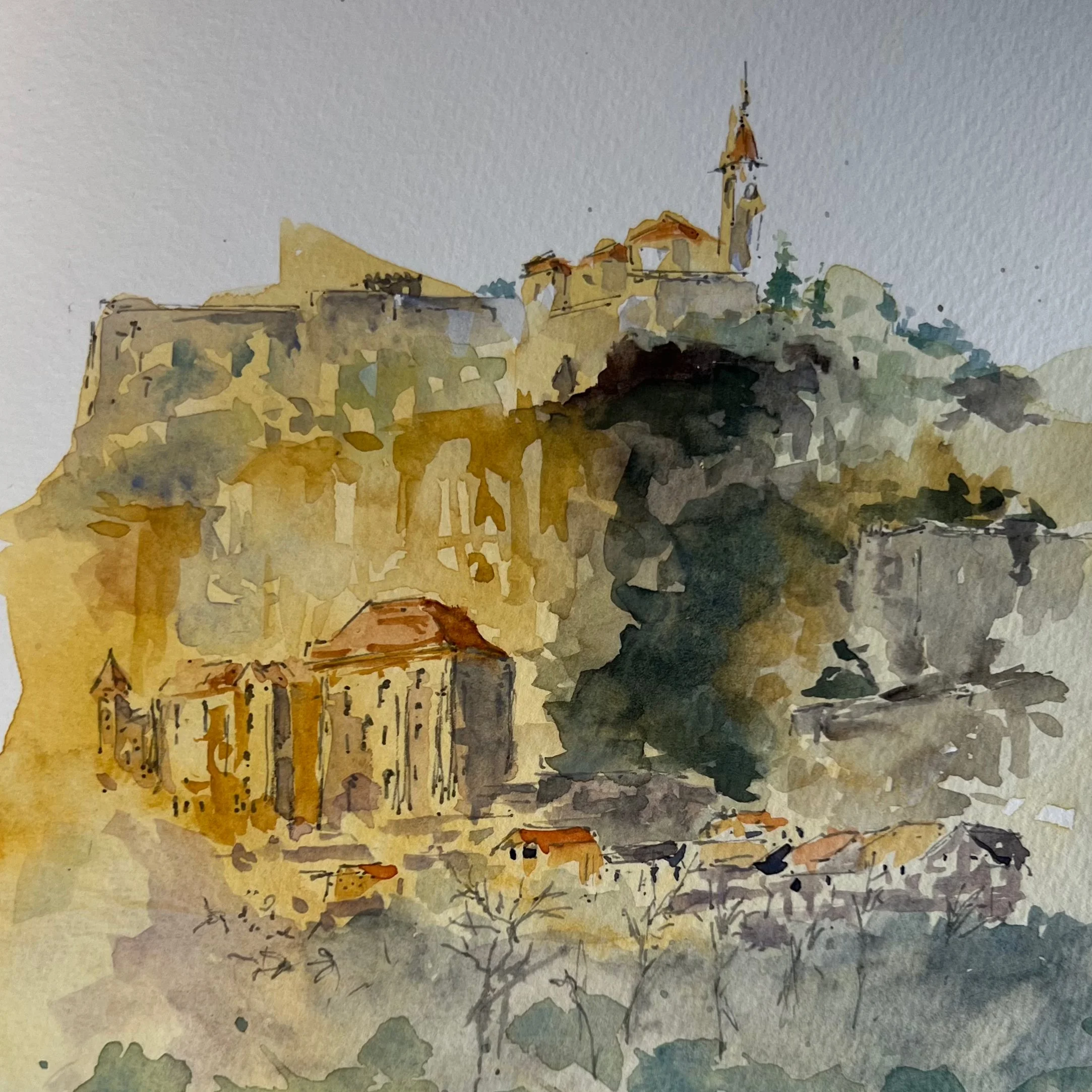
Incroyable, watercolor by Ian Mutton
A Design Choice That’s Served Me for Decades
One of the anchors of my productivity and sanity has been leaving at least one day a week completely meeting-free. That rule has given me space for focused thinking, planning, flexibility, and the kind of work that requires sustained attention.
I’ve held this boundary for more than 30 years—as a professional, a COO, an executive director, and business owner. It has been non-negotiable.
What’s interesting is that I didn’t announce it or formalize it with a big declaration. I simply wove it into how I scheduled my time, so no one really knew about it other than me. And with less than a handful of exceptions each year, I held the line.
That single design choice shaped everything else. It reduced the constant sense of compression, and it made the rest of the week more workable. That’s architecture, too—by my design.
Making Room for a Month Away
Now, taking a month off may seem like the 2.0 (or even 3.0) version of time architecture. But this is the fourth time I’ve done it and (good Lord willing) won’t be the last. It begins with early and honest planning.
We scheduled our time away during the holidays, a naturally slower season for our business. We mapped out our workloads well in advance and communicated clearly with clients. As a result, we could really escape and enjoy every moment of our adventure.
Why Time Deserves This Much Care
I’m not saying every leader should aspire to regularly take a month off. What you’re craving to do with your time is unique to you. But if you’re longing to architect your time in a different way, I’m here to tell you it is possible. Not only that, it will also make you a better leader.
Executives who shape their own time tend to think more clearly. Decisions feel less rushed. Attention is directed rather than scattered. Relationships are strengthened because you can be more present. When time has structure, it supports the work instead of competing with it.
A Few Places to Begin
There’s no single blueprint. But a few choices can shift the rhythm of your days, if you stick to them.
Protect at least one block of time each week for thinking, planning, or deep work—and treat it as foundational, not optional.
Plan further ahead than feels comfortable. Distance gives you leverage. Short-term planning keeps you reactive.
Work with your energy, not just your obligations. Notice when you’re sharpest and when you’re depleted—and design around that.
Decide which boundaries need explanation—and which ones don’t. Not everything needs to be announced or defended to be effective.
Use slower seasons intentionally. They’re not gaps to fill, but opportunities to reset and prepare.
The way you use your time is a masterpiece that creates your impact as a leader. You don’t need perfect conditions or absolute control to begin shaping it. You just need to decide what kind of structure you want your days to rest on—and start building from there.